7 Best Sex Dice Sets for Couples in 2026?
Choosing the right Sex Dice set can make a familiar evening feel playful, relaxed, and surprisingly personal. However, attractive packaging does not guarantee thoughtful design. Some sets use tiny symbols, weak printing, or uncomfortable materials. A few feel exciting at first, then become repetitive.
Sex educator Dr. Jess O’Reilly offers a useful principle: “Pleasure is a conversation, not a performance.” That idea guides this 2026 comparison. The strongest sets support communication, consent, and easy customization. They should create possibilities, not pressure either partner. Check whether each prompt can be skipped without awkwardness. Small details matter, too. Clear instructions help. Rounded edges feel better in the hand. Waterproof, body-safe materials are easier to clean, although not every product explains its material clearly.
We examined game variety, build quality, readability, portability, and value. We also considered how each set works for new couples, long-term partners, and different comfort levels. Some options are romantic. Others are more daring. A few are better for laughter than serious seduction. That is not necessarily a weakness.
Keep expectations realistic.
The “best” Sex Dice set depends on your shared boundaries, mood, and communication style. This guide highlights seven strong choices while noting their limitations. Read the details carefully, discuss preferences beforehand, and treat every roll as an invitation rather than an instruction. A random result should never replace mutual agreement. That simple distinction makes the experience safer, kinder, and more enjoyable.
What Are Sex Dice Sets and How Do They Work?
Sex dice sets are simple adult conversation tools for couples. Most include two dice: one suggests an action, and the other names a body area. Some sets use mood, timing, or role-play prompts instead. Each roll creates a playful suggestion, not an obligation. The couple decides whether to continue, modify the idea, or skip it. That distinction matters.
In practice, the best experience begins before the first roll. Both partners should be consenting adults and agree on clear boundaries. Discuss comfortable activities, sensitive areas, and a stop word. A roll can inspire curiosity, but it should never replace honest communication. Keep the dice clean, store them privately, and avoid using them when either person feels pressured, tired, or impaired. The random element can feel exciting. It can also produce an awkward result.
Tips: Start with gentle prompts and use a three-option rule: try, change, or skip. Keep water nearby and check in after unusual suggestions. If a prompt feels too vague, clarify it before acting. Never assume silence means agreement. I have found that couples often enjoy the laughter more than the “perfect” roll. That is normal. The game may need adjustment after each session, especially when comfort levels change. Look for sets with readable instructions, inclusive language, and materials that are easy to clean. A thoughtful set supports connection, not performance.
Which Features Matter When Choosing a Couples’ Sex Dice Set?
Choosing a couples’ sex dice set involves more than attractive packaging or daring prompts. The best option should support clear consent, comfortable pacing, and mutual curiosity. Look for large, readable dice with smooth edges and non-toxic, body-safe materials. A washable surface matters, especially when the set includes intimate activities. Avoid sets with confusing symbols or instructions that pressure either partner.
Consider how much control the dice give you. Some sets combine body areas, actions, and intensity levels, while others offer simple, beginner-friendly prompts. Customizable dice can suit different boundaries, mobility needs, and relationship styles. Privacy also matters. A discreet storage pouch prevents awkward discoveries and keeps the pieces clean. I might be tempted by dramatic prompts, but practical design usually creates a better experience. No set is perfect.
Tips:
Agree on boundaries before rolling. Use a simple stop word or hand signal. Treat every result as an invitation, never an obligation. Keep water, towels, and gentle cleaner nearby. If a prompt feels uncomfortable, reroll without explaining. Check the dice for cracks after repeated use, since damaged surfaces can hold bacteria. Short sessions often work better than forcing every prompt.
How Do Different Sex Dice Styles Create Different Experiences?
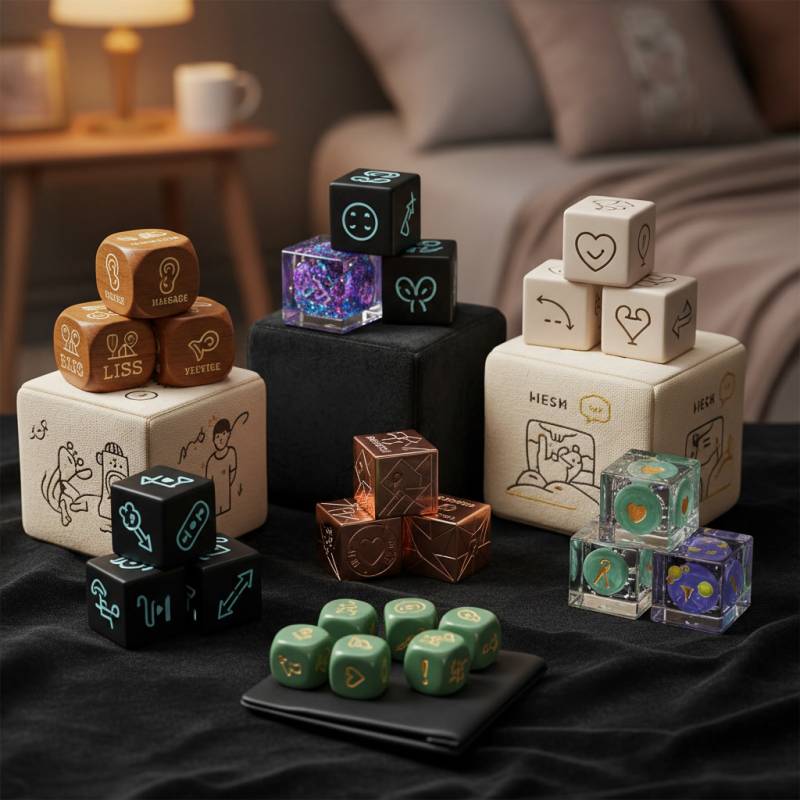
Different sex dice styles can shape the mood before the first roll. Action-and-body-part dice create quick, playful direction, while mood dice use words such as “slow,” “teasing,” or “bold.” Scenario dice build a small story around the room, making the experience feel less mechanical. Customizable dice offer more control, especially for couples with clear preferences or different comfort levels.
The global sexual wellness market was valued at about $56.5 billion in 2023, according to Grand View Research’s 2024 industry report. That growth reflects wider interest in accessible, couple-focused intimacy tools. The 2023 TENGA Global Self-Pleasure Report also surveyed more than 10,000 adults across multiple countries, showing how varied personal preferences can be. Those figures do not prove that dice improve intimacy. They suggest a growing demand for flexible experiences.
In practice, visual symbols work best for fast decisions. Word-based dice may invite more imagination. Sensory prompts can turn a bedroom into something warmer: dim lighting, a silk fabric, or a timed pause. Couples should agree on boundaries before playing, including a clear stop word. A roll is never consent. Some sets also feel too repetitive after several rounds. That is a limitation worth admitting. Rotating styles, rewriting prompts, and removing uncomfortable options can make the game feel more personal. Less pressure often creates better conversation.
7 Best Sex Dice Sets for Couples in 2026? How Do Different Sex Dice Styles Create Different Experiences?
Scores use a 1–5 editorial scale based on the typical design characteristics of each style: the number of possible combinations, the range of activities it can suggest, and how quickly couples can begin playing. Higher scores indicate more variety, a wider intensity range, or simpler setup. Actual experiences vary by the dice wording, personal boundaries, and communication between partners.
How to Compare the Best Sex Dice Sets for Couples in 2026?
Comparing sex dice sets for couples in 2026 requires more than checking the number of dice.
Start with the materials. Smooth, nonporous silicone or sealed wood is easier to clean than rough, untreated surfaces. Check whether the ink stays clear after repeated washing. A practical set should include readable instructions, sturdy dice, and a pouch for bedside storage. Test the wording, too. Commands should feel playful, not pressuring. Clear consent language matters, especially when a roll suggests an unfamiliar activity. The best sets let either partner skip, modify, or reroll without embarrassment. That small rule can change the mood.
Compare the balance between randomness and control. Some sets combine an action, body area, and time limit. Others offer prompts with different intensity levels. Flexible options suit couples with different comfort levels. Look for inclusive language rather than assumptions about gender, anatomy, or relationship roles. Reviews from qualified sexual-health educators can show whether prompts are realistic, respectful, and suitable for adults. User feedback helps, but treat dramatic claims carefully.
I once dismissed packaging as unimportant, then found a flimsy box frustrating during regular use. That was a useful correction.
Also consider cleaning instructions, storage, return policies, and whether the set works without alcohol or extra products. A good comparison measures comfort, durability, clarity, and shared enjoyment, not just novelty.