How to Choose the Right Butt Plug for Global Buyers?

Choosing the right Butt Plug is not simply a matter of size or appearance. For global buyers, the decision also involves body safety, comfort, quality, and local purchasing rules. A thoughtful choice should feel practical before it feels exciting. This guide uses clear sexual-wellness criteria that shoppers can compare across brands and markets. Individual preferences differ. There is no universal best option.

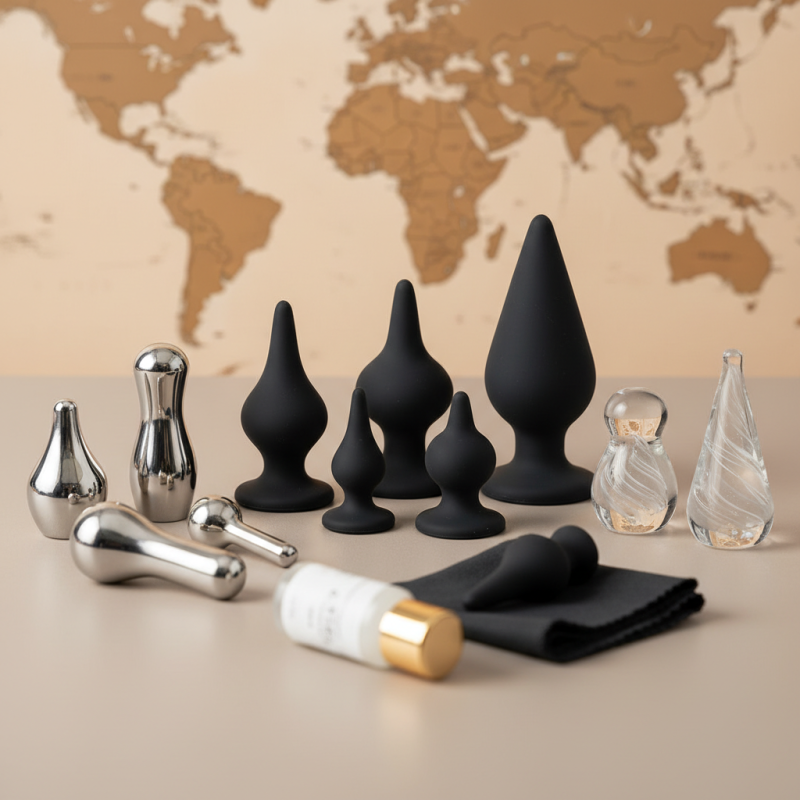
Look for non-porous, body-safe materials, including quality silicone, stainless steel, or borosilicate glass. Check manufacturer details, care instructions, and independent testing where available. A strong, flared base is essential because it helps prevent full insertion. This is not a feature to compromise. Buyers should examine diameter, length, flexibility, and weight. A smaller, tapered design may suit beginners. Experienced users may prefer different dimensions. However, experience does not remove the need for patience, suitable lubricant, and gradual use.

International shoppers face different terminology, shipping restrictions, tax policies, and age requirements. Verify the seller’s return policy, privacy practices, warranty, and compliance statements before payment. Avoid products with unclear materials, sharp seams, strong chemical odors, or exaggerated health claims. Clean the product according to its instructions. Stop immediately if pain, numbness, or bleeding occurs. Seek qualified medical advice when symptoms continue. Product pages can look convincing. They are not always reliable. By comparing evidence and reflecting on personal comfort, buyers can make safer, more informed decisions across borders.
How to Choose the Right Butt Plug for Global Buyers?

Define Use Case and Fit Goals Under ISO 3533:2021 Safety Principles

Choosing the right butt plug begins with a clear use case, not appearance. A buyer may want short-term wear, gentle training, or a stable fit during movement. Each goal needs different dimensions. Record the body-safe material, total length, usable length, diameter, and base width. ISO 3533:2021 safety principles emphasize design for intended use, secure retention, clear warnings, and surfaces that can be cleaned properly.

Fit should feel controlled, never forced. A beginner may prefer a smaller diameter, rounded tip, and a wide flared base that remains outside the body. The base should be easy to grip with wet hands. Check for smooth seams, cracks, sharp edges, or loose components before use.

Use compatible lubricant, follow the material guidance, and clean the product according to its care instructions. Do not rely on packaging language alone.

Real-world comfort can differ from a measurement chart. That is easy to underestimate. If pressure, numbness, bleeding, or persistent pain occurs, stop and seek qualified medical advice. A product can meet a safety specification and still be unsuitable for one person’s anatomy or goal. Global buyers should also review local consumer-safety requirements, hygiene rules, and translated instructions before purchase. Careful selection is useful, but personal fit remains the part most buyers must reassess.

Compare Silicone, ABS, Glass, and Steel Using ISO 10993 Test Evidence

How to Choose the Right Butt Plug for Global Buyers?

When comparing silicone, ABS, glass, and steel, material labels are only the starting point. The finished product matters more. ISO 10993-1 recommends a risk-based evaluation based on contact type and duration. A product for mucosal contact needs stronger evidence than one touching intact skin.

Medical-grade silicone often offers softness and flexibility, but additives, pigments, and curing residues still require review. ABS is rigid and lightweight, yet its formulation and surface coating can affect chemical safety. Glass is non-porous and easy to clean, although chips, cracks, or decorative coatings create practical risks. Stainless steel is durable and stable, but buyers should verify its exact alloy and surface finish. Material names mislead.

Ask for evidence. Useful documents may include ISO 10993-5 cytotoxicity, ISO 10993-10 irritation or sensitization data, and chemical characterization under ISO 10993-18. Testing should represent the final product, including colors, adhesives, coatings, and packaging contact. A raw-material report is not enough. Neither is a vague “body-safe” claim. Request test dates, laboratory identification, sample descriptions, and extraction conditions. Check whether the report matches the intended use and exposure duration. I have seen specifications look convincing until the tested sample differed from the production version. That weakness deserves attention. Global buyers should also review cleaning instructions, traceability, and local compliance requirements before purchase.

Select Diameter, Length, and Flared-Base Geometry for Safe Retention

How to Choose the Right Butt Plug for Global Buyers?

Global buyers should treat diameter as the main retention factor, not total length. A beginner-friendly design often starts around 25–32 mm in diameter, with a gradual taper. Wider sizes require more experience, patience, and lubrication. Measure the widest point, not the handle. Small differences can feel surprisingly significant.

Length should provide control without unnecessary internal reach. A practical insertable length may range from 70–120 mm, depending on body comfort and design shape. The flared base must remain clearly wider than the shaft. A stable base, short neck, and rounded edges reduce unwanted movement during use. ISO 3533:2021 highlights safety considerations for sexual products, including material safety, structural integrity, and user instructions. These details matter more than decorative geometry.

The global market is expanding. Grand View Research estimated the worldwide sex toys market at approximately US$35 billion in 2023, showing demand across varied regions and preferences. That figure does not prove one universal size standard. It suggests the opposite. Buyers need clear dimensional data. I would also question vague labels such as “small” or “medium.” They are inconsistent. Check diameter, insertable length, base width, and material information separately. Use body-safe, non-porous materials when possible, inspect seams before use, and stop when pain, bleeding, or numbness appears. A wider base is safer than a narrow one. But geometry alone cannot replace careful use.

How to Choose the Right Butt Plug for Global Buyers?

Reference dimensions for selecting diameter, insertable length, and flared-base geometry

Smaller diameters and shorter insertable lengths are generally easier for beginners. A flared base should remain wider than the shaft to help prevent complete insertion and should provide a stable grip for removal. These representative ranges are design references, not medical limits; users should select the smallest comfortable size, use sufficient lubricant, and stop if pain or bleeding occurs.

Measurement convention: diameter and insertable length are shown in millimetres. Individual products and user comfort requirements vary.

Verify Waterproofing and Charging Claims Against IEC 60529 IP Ratings

For global buyers, waterproof claims should be checked, not simply trusted. IEC 60529 defines IP ratings for protection against dust and water. The code has two digits, or an “X” when one test is not rated. IPX7 means the device passed temporary immersion testing, commonly up to one metre for 30 minutes. It does not automatically prove dust protection.

Look closely at the product label and test documents. The tested model number should match the item you plan to buy. IPX6 protects against powerful water jets, but it does not automatically equal IPX7 immersion protection. Some products carry both ratings because they passed both tests. Small details matter. A loose charging cover can weaken protection over time.

Charging claims need separate attention. Never charge the device while it is wet or submerged. Dry the contacts and inspect the seal after cleaning. An IP rating covers the enclosure under specific laboratory conditions. It does not guarantee protection from soap, oil, salt water, pressure, or repeated daily use. I have found that “waterproof” is often used too broadly. That wording can mislead buyers. Ask for the IEC 60529 test report, testing date, and laboratory information. Also check whether the warranty excludes water damage. A rating helps, but careful verification remains necessary.

How to Choose the Right Butt Plug for Global Buyers? - Verify Waterproofing and Charging Claims Against IEC 60529 IP Ratings

Evaluation Dimension IEC 60529 Reference or Verification Point What the Buyer Should Look For Practical Interpretation Risk if the Claim Is Not Verified
IP code format An IP code normally uses two digits: the first indicates protection against solid foreign objects and dust; the second indicates protection against water. A complete marking such as IPX7 or IP67, supported by test documentation. “X” means that the corresponding characteristic is not specified in the marking; it does not automatically mean zero protection. A vague “waterproof” label may conceal missing dust or water-test information.
IPX4 splash resistance Protection against splashing water from any direction under the applicable test conditions. The product specification should state IPX4 and identify which areas are protected. Suitable only for splash exposure; it is not an immersion rating. Submerging or rinsing the product may allow water to reach electronics or charging contacts.
IPX5 water-jet resistance Protection against water projected by a nozzle as a water jet under the specified test conditions. Request the exact rating and test report rather than relying on “showerproof.” Provides stronger jet protection than IPX4, but does not by itself prove immersion resistance. A buyer may incorrectly assume that jet resistance equals safe submersion.
IPX6 powerful water jets Protection against powerful water jets under the applicable test conditions. Confirm whether the claimed rating is IPX6 or IPX6K; these markings should not be treated as interchangeable without technical evidence. Strong jet protection still does not automatically establish protection against immersion. Cleaning instructions may be exceeded if the product is placed underwater.
IPX7 temporary immersion Protection against temporary immersion in water; the commonly referenced test condition is immersion at up to 1 m for 30 minutes, subject to the standard’s test arrangement. Look for an explicit IPX7 or higher water rating and a report identifying the tested configuration. More relevant than IPX4–IPX6 when the product may be briefly submerged. The product may fail if used deeper, longer, or in conditions outside the tested configuration.
IPX8 continuous immersion Protection against continuous immersion in water under conditions agreed between the manufacturer and the user; the depth and duration must be specified. Request the stated immersion depth, duration, orientation, and whether the charging cover was closed during testing. Usually more demanding than IPX7, but the actual performance depends on the declared test conditions. “IPX8” alone does not tell the buyer how deep or how long the product can be immersed.
Dust protection: IP5X The first digit “5” indicates dust-protected equipment, with limited dust ingress permitted provided operation and safety are not impaired. Use a complete marking such as IP57 or IP58 if dust performance matters. It is not the same as complete dust-tightness. Fine particles may still enter over time, particularly around seams or moving parts.
Dust-tightness: IP6X The first digit “6” indicates dust-tight equipment under the applicable test conditions. Check whether the dust rating applies to the complete assembled product, not only a component. Useful where dust ingress could affect seals, motors, or charging interfaces. A high water rating without adequate dust sealing may still leave the product vulnerable to debris.
Charging-port protection The IP rating concerns the enclosure as tested. It does not automatically prove that an exposed charging port is safe when wet. Verify the port design, sealing plug or magnetic interface, and the exact configuration used for the IP test. A removable cover must be fully closed and correctly seated before water exposure unless the documentation says otherwise. Water at the charging contacts can cause corrosion, short circuits, charging failure, or electrical hazards.
Charging while wet IEC 60529 water-ingress protection is not a general authorization to connect or charge a wet product. The instructions should explicitly require drying the product and charging interface before charging. Treat “waterproof” and “safe to charge while wet” as separate claims requiring separate evidence. Users may connect power before moisture has evaporated from contacts or openings.
Wireless or magnetic charging A sealed charging interface can reduce openings, but the complete product still requires verification in its intended charging configuration. Confirm whether the charger, contact area, alignment surface, and product were included in the tested assembly. Fewer exposed openings may support better sealing, but charging convenience alone is not an IP rating. The charging dock or magnetic contacts may remain vulnerable even when the main housing is sealed.
Test-report quality A credible report should identify the tested sample, rating, test method, test conditions, date, and result. Request a report or certificate traceable to the exact model and revision being purchased. A generic laboratory document for another model is not sufficient evidence for the current product. Design changes, new seals, or a different charging port can invalidate assumptions based on an older sample.
Global documentation IP marking should be accompanied by clear operating limits and care instructions appropriate to the destination market. Check translated instructions, cleaning limits, charging warnings, storage conditions, and warranty exclusions. Consistent documentation reduces misuse across different languages and consumer expectations. Ambiguous wording can create inconsistent claims, returns, and product-safety complaints.
Recommended buyer decision rule Select the lowest rating that fully covers the intended exposure, then confirm the exact test conditions and charging restrictions. For immersion use, prioritize a documented IPX7 or IPX8 claim; for dust-sensitive environments, review the first IP digit as well. Do not upgrade an IPX4–IPX6 product to an immersion category based only on marketing language. Overestimating the rating can lead to water ingress, charging damage, premature failure, and unsafe use.
Buyer verification note: An IP rating describes protection against dust and water under defined laboratory conditions. It does not by itself confirm material compatibility, hygiene performance, mechanical durability, or safe charging while wet. Always follow the product’s specific instructions and verify the tested configuration.

Screen Global Compliance: REACH’s 0.1% SVHC Threshold, RoHS, and Labels

Choosing a butt plug for global markets requires more than checking size, shape, and surface finish. Material evidence matters. Ask suppliers for a complete bill of materials, not only a general “body-safe” statement. Under REACH, an article containing a Substance of Very High Concern above 0.1% by weight may trigger communication duties. The calculation applies to each article, which can include separate components. Request recent laboratory reports, supplier declarations, and batch traceability. Paperwork is not proof.

RoHS should be checked when the product contains electrical or electronic parts, such as vibration motors, charging boards, or batteries. It restricts substances including lead, mercury, and certain flame retardants. A simple silicone-only product may fall outside RoHS scope, but its packaging or accessory may not. Confirm the product category and test method with a qualified compliance professional. Do not copy a report from a similar item. Small design changes can alter the result.

Labels must match the destination market. Include material information, responsible-party details where required, warnings, cleaning guidance, disposal symbols, and electrical ratings when relevant. Keep wording readable on the package, not hidden only in online listings. I would also inspect a production sample against the approved file. In practice, colorants, adhesives, and cable coatings are easy to overlook. That is where reviews often fail. Recheck the evidence before shipment.